At a glance
- PET (Polyethylene Terephthalate) is a versatile engineering plastic used across packaging, automotive, electrical, and industrial applications.
- It provides strong tensile performance (typically 50–80 MPa), low moisture absorption, good chemical resistance, and reliable dimensional stability.
- PET is chosen for components such as gears, housings, machine guards, fibres, and transparent packaging due to its rigidity, surface hardness, and recyclability.
Engineering plastics continue to replace metals and lower-grade polymers in manufacturing, industrial design, food processing, medical equipment, electronics, and consumer products.
Practical requirements drive the shift: materials must hold performance over time, reduce component weight, and support recyclability targets without compromising mechanical performance or dimensional accuracy. PET fits well in this space because it behaves predictably during processing, maintains its shape once installed, and offers a solid cost-to-performance balance.
This article outlines what PET plastic is, how it functions as an engineering material, the key properties that define its performance, and where it is commonly applied across Australian industries.
What Is PET Plastic?
Polyethylene Terephthalate, or PET, is a thermoplastic polymer in the polyester family. It is recognised for its strength, rigidity, and low moisture absorption, which make it suitable for engineering components as well as fibre and film applications. This engineering plastic is produced using standard thermoplastic processing technologies and can be shaped through moulding, extrusion, and thermoforming.
PET behaves predictably at its melt temperature, maintains its dimensions after cooling, and absorbs very little moisture, which contributes to stable performance in industrial settings. With controlled heating and cooling, you can achieve clear or semi-crystalline finishes, giving you flexibility when balancing aesthetics, rigidity, and mechanical behaviour.
Key Properties of PET
PET combines several high-value performance characteristics in a single material, making it stand out among other engineering plastics. Below are the important properties of PET:
Mechanical Properties
Engineering-grade PET typically delivers tensile strengths of 50 to 80 MPa, along with reliable stiffness and stable impact performance. This allows it to hold shape under load and maintain mechanical accuracy over repeated cycles.
PET’s tensile strength, rigidity, and fatigue resistance make it suitable for gears, spacers, structural housings, and components that need to retain shape over long service cycles. Fatigue resistance is one of its stronger attributes, especially when compared with commodity plastics like PP.
Thermal Properties
PET has a melting point of 250-260°C and a glass transition temperature of 70-80°C. The exact range depends on polymer grade, crystallinity level, and performance additives used in the formulation.
While it does not match the high-temperature performance of advanced polymers like PEEK, it performs well in moderate-heat environments. Engineers value its stability when temperatures rise temporarily during operation, provided the material is not exposed to continuous elevated heat.
Chemical Resistance and Barrier Performance
PET resists dilute acids, alcohols, oils, and many industrial solvents. It also absorbs very little moisture, which helps it maintain dimensional accuracy in humid or wet environments.
Its oxygen- and carbon-dioxide-barrier properties are significantly stronger than those of other polymers. This makes it useful for engineering applications that need controlled permeability.
Optical and Aesthetic Qualities
One of PET’s defining characteristics is its high transparency. It can be produced with a premium surface finish, which is useful for consumer products, industrial guards, transparent covers, or any part where appearance matters. It also accepts pigments well, allowing manufacturers to produce coloured or high-gloss components.
Other Engineering Attributes
PET offers strong wear resistance, good electrical insulation, and consistent machining results when used for simpler shapes. However, note that cutting parameters must be controlled to avoid heat-softening.
It is also one of the most recyclable plastics in circulation, with well-established recovery and processing streams across Australia. This includes both mechanical recycling and the growing availability of recycled PET (rPET).
From a cost perspective, PET is more economical than high-performance materials such as PEEK and offers better rigidity and stability than commodity plastics like PP. It also provides easier recyclability compared with engineering plastics such as Polycarbonate (PC) or Nylon.
Applications of PET Across Industries
PET is used across many industries because it performs reliably in both packaging and engineering roles. Its strength, optical clarity, low moisture absorption, and stable mechanical behaviour make it suitable for components that need consistent accuracy or lighter weight without losing durability.
Here are some of the industries that rely on PET.
Packaging (Bottles, Trays, Films)
PET is the best choice for manufacturing clear bottles, thermoformed trays, and high-performance film due to the clarity, strong barrier properties, and reliable strength it offers. Packaging sectors widely use recycled PET (rPET) as it supports sustainability, along with providing the characteristics of virgin PET.
rPET also appears in fibres, strapping, and selected industrial goods. For packaging that needs greater rigidity or resistance to impact and loading, engineering-grade PET provides the required stiffness and dimensional control.
Engineering Applications
For under-bonnet components, PET is generally used in areas with moderate heat exposure, or reinforced grades are selected to maintain stiffness at elevated temperatures. Moreover, electrical and electronic components such as switches, connectors, and insulating housings also make use of PET because it offers strong dielectric performance and maintains tight dimensional tolerances.
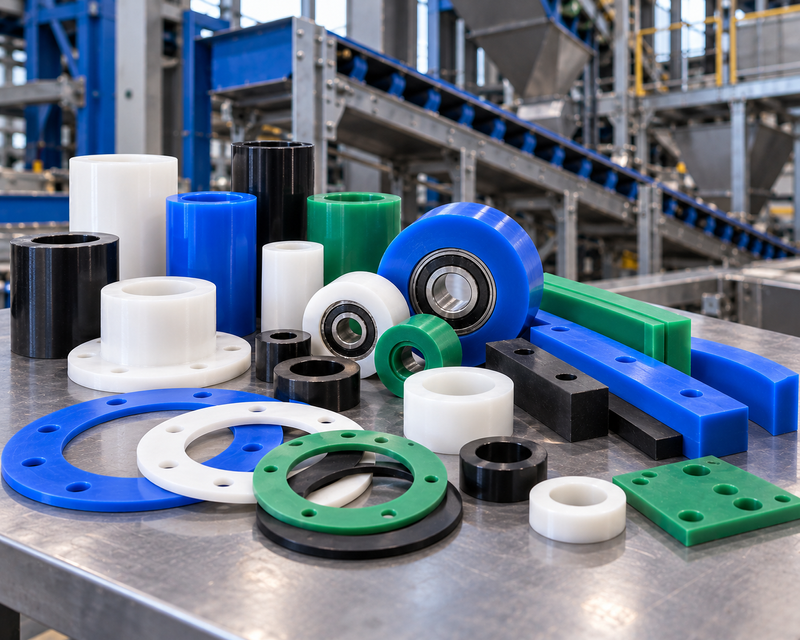
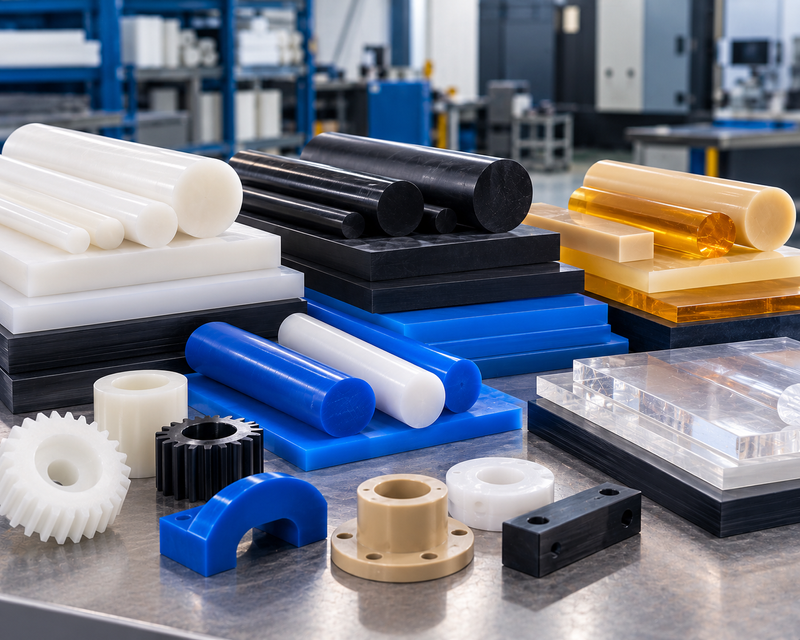
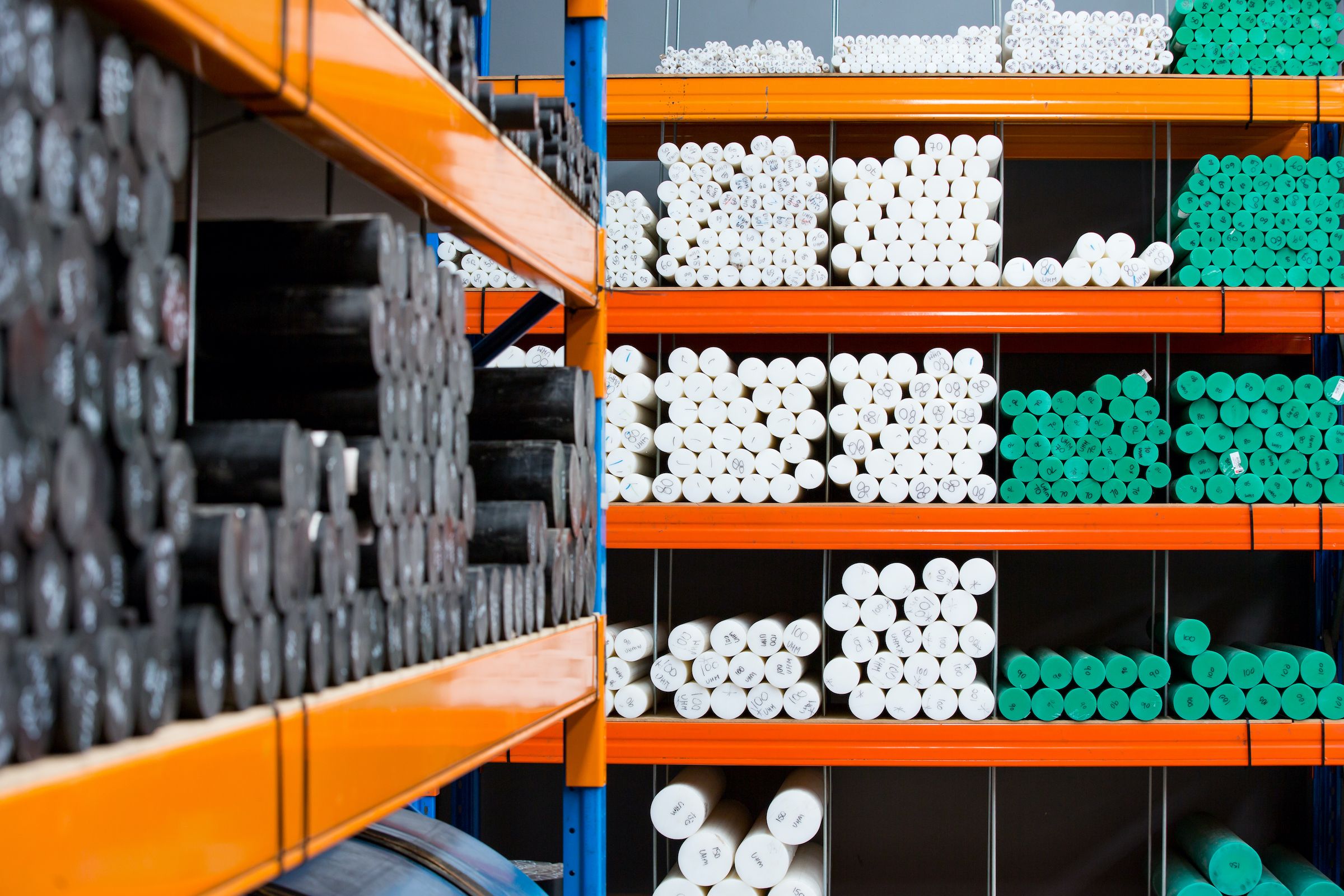
Industrial environments use PET sheet and PET rod for gears, wear components, machine guards, and extrusion profiles. Its low moisture absorption helps these parts remain stable in damp or variable-humidity conditions. PET also plays a major role in fibre and film production, where its strength and resistance to stretching make it suitable for industrial belting, tapes, strapping, and performance textiles.
Construction or Consumer Goods
PET is used in construction-related products and consumer goods for appliance components, structural covers, and transparent or high-gloss design elements.
Manufacturers value its balance of durability, surface hardness, and appearance, which makes it suitable for household products, tools, and light machinery. Panels or covers that need rigidity without unnecessary weight often rely on PET for consistent performance and ease of forming.
PET stands out as a reliable engineering plastic because it offers strength, dimensional stability, optical clarity, and strong chemical resistance in a single material. These attributes make it valuable across industries ranging from packaging and automotive to electronics, construction, and industrial manufacturing. Its recyclability and established recovery pathways add further weight to its role in modern product design. For projects where performance, appearance, and material efficiency need to align, PET is often a strong fit.
If your project requires engineering-grade PET with dependable mechanical and dimensional performance, visit ePOL’s online portal to explore our range. Or contact the team for tailored advice for your application.
FAQs
Can PET withstand high temperatures?
PET has a melting point of 250–260°C and a glass transition temperature of 70–80°C. While it performs reliably in moderate-heat environments, its mechanical strength and dimensional stability can decline with continuous exposure above roughly 120°C.
Is PET recyclable?
Yes. PET is one of the most widely recycled plastics globally, supported by well-established collection and processing systems in Australia and overseas. It can be turned into rPET for new packaging, textiles, strapping, and select engineering components, making it an attractive option for sustainability-driven projects.
When is PET the right choice for an engineering application?
PET is ideal for applications requiring stiffness, surface hardness, chemical resistance, and low moisture absorption. It performs well in components where dimensional stability is important, such as housings, gears, or structural profiles.
What are the limitations of PET?
PET is not recommended for high-heat environments, heavy impact applications, or parts that require extensive machining. Under aggressive mechanical loads or sharp impacts, it may become brittle compared with more flexible materials like ABS or PETG. Its machinability is also more limited than Acetal, which is often preferred for complex or tight-tolerance components.