At a glance
- HDPE and UHMWPE share similar chemical properties but differ in molecular weight and performance.
- HDPE offers cost-efficient strength, machinability, and chemical resistance.
- UHMWPE delivers exceptional wear resistance, toughness, and impact strength for demanding uses.
- Choosing the right material depends on load, friction, temperature, and operational requirements.
High-Density Polyethylene (HDPE) and Ultra-High Molecular Weight Polyethylene (UHMWPE) are two of the most commonly used engineering plastics across industrial and commercial applications. Both belong to the polyethylene family and share similar chemical foundations.
Yet they perform differently due to variations in their molecular structure and weight. Their structural differences affect how they perform under load, friction, and varying temperatures.
This article compares the properties of HDPE and UHMWPE, their fabrication behaviour, and practical applications to help you determine the best engineering plastic to suit your requirements.
Let’s start with an overview of each material.
HDPE – Lightweight, Versatile, and Economical
HDPE is a durable, cost-efficient plastic known for its strength and adaptability. It is lightweight, allowing easy handling and fabrication and offers the rigidity for structural use. Its resistance to chemicals and moisture allows consistent performance in wet, corrosive, and temperature-changing environments.
HDPE can be machined, welded, and formed with ease using standard equipment, supporting a wide range of industrial and commercial applications.
For more information on HDPE, refer to What Is HDPE Plastic? Understanding Its Properties and Application.
UHMWPE – Exceptional Wear and Impact Resistance
UHMWPE is a polyethylene with much longer polymer chains than HDPE. Its structure delivers superior abrasion resistance and high impact absorption. Moreover, its inherently low-friction, self-lubricating surface limits drag and material build-up, so materials keep moving smoothly in continuous-duty environments.
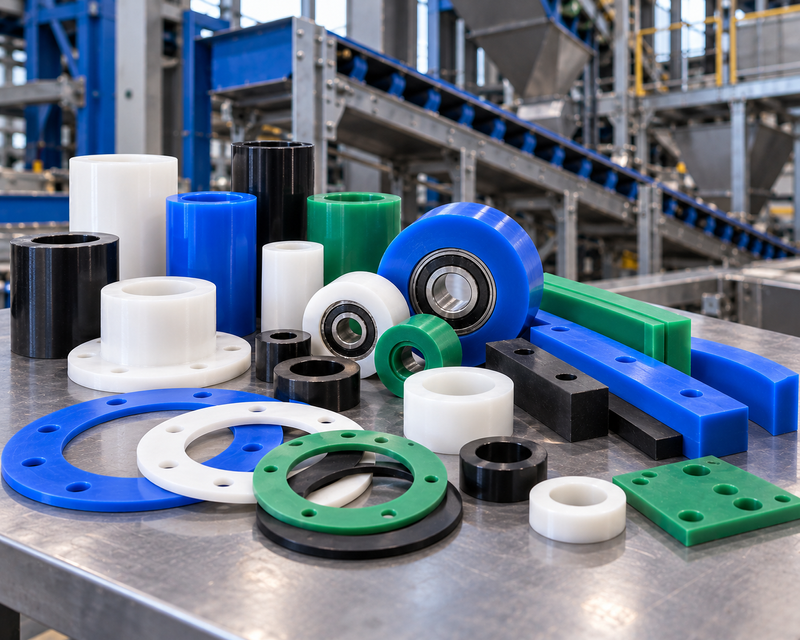
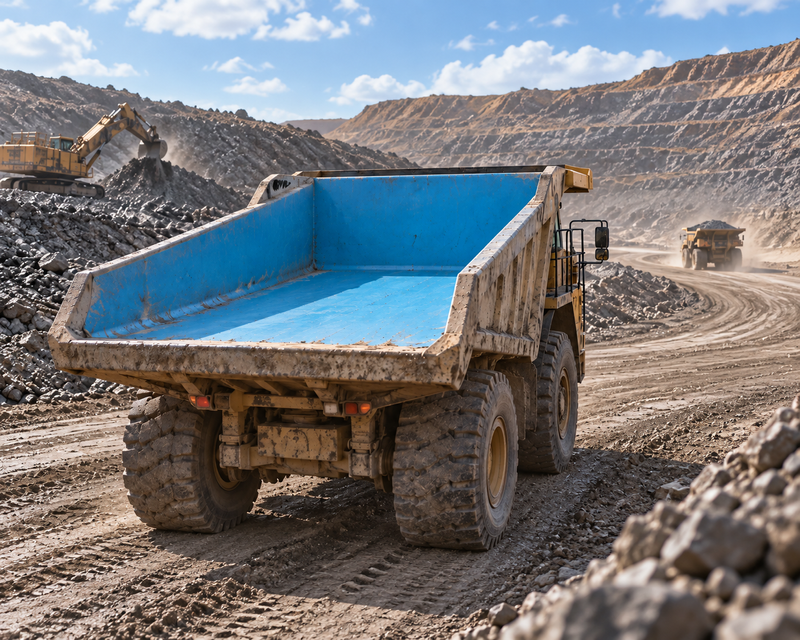
Components made from UHMWPE stay reliable across a broad temperature range and resist moisture and common chemicals. The most common applications of UHMWPE include liners, rollers, wear strips, and gears in mining, bulk-handling, transport, processing plants, and similar equipment exposed to constant movement, abrasion, or heavy loads.
Further insights are available in Introduction to UHMWPE: Understanding the Basics.
Performance and Application Differences Between HDPE and UHMWPE
Here are the differences between HDPE and UHMWPE:
Mechanical Strength and Impact Performance
HDPE provides dependable structural strength and good impact resistance for general-purpose applications. Moreover, its dimensional stability without excessive flexibility allows it to perform reliably in products such as tanks, panels, and fittings.
In contrast, UHMWPE’s ultra-long molecular chains give it high impact absorption and toughness. It is often chosen for components subject to heavy movement or repeated contact, where long-term durability under load is critical. This difference makes UHMWPE ideal for use in wear plates, liners, and heavy-duty machinery parts that endure constant friction or vibration.
Wear and Surface Durability
HDPE offers dependable surface performance suited to moderate conditions. It withstands regular handling and low-load contact, providing a balance between durability and cost. In containment or structural uses with limited abrasion, HDPE maintains its integrity and offers strong chemical protection.
UHMWPE’s dense molecular structure creates a smooth, low-friction surface that resists wear even under continuous contact. It performs well in applications such as conveyors, chutes, and transport systems where components are in constant motion and reliability depends on minimal surface degradation.
Temperature and Chemical Stability
HDPE and UHMWPE are both proven performers in harsh chemical environments. Both materials resist acids, alkalis, and solvents, but they perform differently across temperature ranges.
HDPE operates reliably over a wide temperature range, from approximately -50 °C to +80 °C, retaining its shape, rigidity, and chemical resistance in both ambient and warm-process conditions.
UHMWPE offers a usable temperature range from around -200 °C to +80 °C. Its ability to stay impact-resistant and stable at deep-cold temperatures makes it a preferred choice for refrigerated environments, outdoor installations, and systems exposed to freezing conditions.
Fabrication and Processing Characteristics
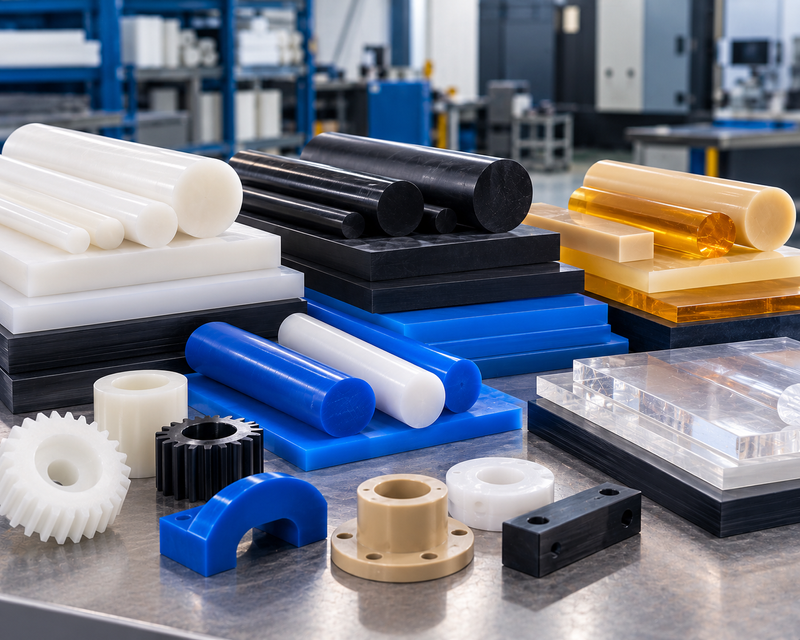
HDPE’s versatility extends to fabrication. It can be cut, welded, and machined with ease, allowing efficient production of sheets, fittings, and formed parts. Its predictable handling characteristics make it a preferred choice for manufacturers producing large or customised components.
UHMWPE’s toughness, on the other hand, requires slower machining and sharper tools. While the processing is more specialised, the prepared component offers excellent longevity and reduced maintenance once in use.
Application and Cost Considerations
HDPE and UHMWPE each serve distinct purposes across industry sectors. And their suitability depends on performance priorities rather than material hierarchy.
HDPE is typically used in moderate-load environments that require structural strength, ease of cleaning, and chemical resistance, and is an ideal choice if reliability and cost efficiency are important to your manufacturing. Some examples include storage tanks, pipe fittings, and food-processing equipment.
UHMWPE has a higher processing cost but delivers superior performance under demanding conditions. Its durability makes it ideal for mining, transport, bulk handling, and any application that experiences constant movement and heavy contact.
HDPE vs UHMWPE: Quick Comparison Table
The table below summarises the distinctions between HDPE and UHMWPE across their mechanical, thermal, and practical properties.
|
Property |
HDPE |
UHMWPE |
|
Molecular Weight |
300,000 - 500,000 |
3 - 6 million+ |
|
Density (g/cm³) |
0.94 - 0.96 |
0.93 - 0.94 |
|
Impact Resistance |
Withstands moderate impact; suitable for structural and containment applications |
Extremely high impact absorption; resists repeated shock and heavy loads |
|
Wear Resistance |
Performs well under intermittent friction or low-load contact |
Exceptional resistance to abrasion and surface wear under continuous sliding |
|
Friction Coefficient |
Low (~0.25–0.30) |
Very Low (~0.10–0.15); self-lubricating |
|
Machinability |
Easy to cut, weld, and shape |
Requires slower machining; tool-wear resistant |
|
Temperature Range |
-50 °C to +80 °C |
-200 °C to +80 °C |
|
Chemical Resistance |
Excellent; resists most acids, bases, and solvents |
Excellent; maintains integrity even in prolonged chemical exposure |
|
Cost |
Lower initial cost; efficient for bulk use |
Higher processing cost, but its durability supports long-term value |
|
Common Application |
Tanks, pipes, sheets, packaging |
Equipment liners, gears, rollers, wear strips |
Choosing the Right Material Between HDPE and UHMWPE
Each material offers distinct features in terms of wear resistance, friction reduction, temperature tolerance, and cost-efficiency. Thus, selecting the right one ultimately comes down to the specific demands of your operation.
HDPE is ideal for general-purpose use where ease of fabrication, rigidity, and corrosion resistance are essential. UHMWPE is applicable for high-friction, heavy-duty, or impact-intensive environments.
Both HDPE and UHMWPE are durable, recyclable, and long-lasting engineering plastics that deliver consistent results when matched correctly to the operating conditions. If there is any uncertainty, consulting an engineering plastics specialist can help determine which polymer best aligns with your design, production, or maintenance goals.
Check out ePOL if you are looking for a reliable HDPE and UHMWPE supplier in Australia. Contact us today for expert guidance on material selection and availability.
FAQs
How does molecular weight affect the performance of HDPE and UHMWPE?
A higher molecular weight gives UHMWPE longer polymer chains, improving its toughness, wear resistance, and impact strength compared to HDPE. HDPE, with shorter chains, remains easier to machine and fabricate. To learn more about how molecular weight influences performance, check out ‘Understanding the Impact of Molecular Weight on Engineering Plastics Performance’.
Is UHMWPE food-safe and suitable for food and beverage applications?
Yes. UHMWPE is non-toxic, odourless, and available in food-grade variants that resist moisture and bacterial build-up, making it suitable for hygienic environments. Its use in processing and packaging applications is discussed in Can UHMWPE Be Used in the Food Industry?
Are HDPE and UHMWPE recyclable and sustainable?
Both materials can be recycled and reprocessed with minimal loss of performance, contributing to more sustainable manufacturing practices. Their recyclability and environmental benefits are detailed in the article "Which Engineering Plastics Are Recyclable?.