At a glance
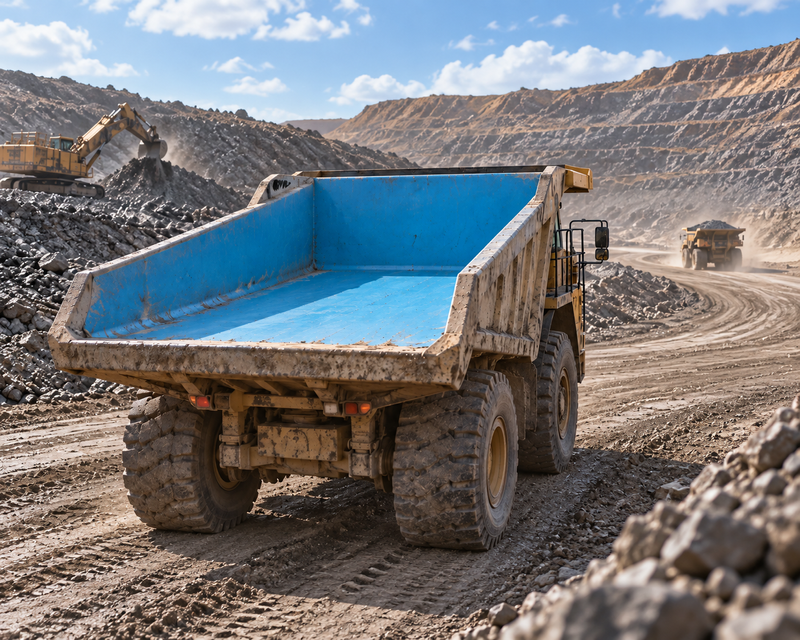
- OKUSLIDE® liners offer lower friction than steel or aluminium liners, helping materials slide out easily with less sticking or carryback.
- Improved material flow compared with metal liners allows trucks to unload at lower and safer tip angles.
- OKUSLIDE® provides strong abrasion resistance and handles harsh bulk loads more effectively.
- Using OKUSLIDE® liners helps protect the truck body from direct wear and minimise long-term damage.
Metals are widely used materials for lining truck bodies, mainly due to their familiarity and availability. However, metal liners can cause various issues during unloading.
In industrial and mining operations, materials may stick to the truck body surface, leading to caking, carryback and slower discharge. In addition, continuous contact with abrasive materials and exposure to moisture or chemicals can accelerate wear, corrosion and surface degradation.
Many operators begin to question whether there is a more efficient alternative to traditional metal liners. OKUSLIDE® is increasingly being adopted as an alternative. Manufactured with UHMWPE engineering plastic, it offers a low-friction, wear-resistant surface that improves material flow and reduces sticking during unloading.
This blog takes a closer look at how OKUSLIDE® compares with conventional metal liners. We will explore how its design enhances safety during unloading, supports smoother material handling and helps extend the truck body’s lifespan.
OKUSLIDE® vs. Metal: The Differences
The table below outlines the main differences between OKUSLIDE® and metal truck body liners across several important operational factors.
|
Performance Factor |
OKUSLIDE® Truck Body Liners |
Metal Truck Body Liners |
|
Material Surface |
Engineered low-friction polymer surface designed to promote material flow |
A hard, metallic surface that can create higher friction against bulk materials |
|
Material Flow |
A smooth, non-stick surface helps materials slide out more easily during unloading |
Materials may stick or cake, especially with wet, fine and compacting loads |
|
Tip Angle Requirement |
Reduced tip angle due to improved flow characteristics |
Often requires a higher tip angle to fully discharge materials |
|
Carryback & Build-Up |
Non-stick properties reduce carryback and residual material in the truck body |
Greater risk of material build-up that may require manual cleaning |
|
Abrasion Resistance |
High abrasion resistance, designed for lining applications and abrasive loads |
Wear resistance depends on the steel grade, but it can still degrade under constant abrasion |
|
Equipment Wear |
Helps protect truck bodies by reducing direct abrasive contact with the base structure |
Continuous abrasion may accelerate wear on the truck body surface |
|
Lifecycle Efficiency |
Designed to improve equipment life cycle through reduced wear and improved flow |
Wear, corrosion and sticking issues may require earlier repairs or liner replacement |
Why OKUSLIDE® Offers a Better Alternative to Metal Truck Body Liners
OKUSLIDE® UHMWPE bed liners improve material movement and interaction with the truck body, unlike traditional metal liners that mainly provide surface hardness. The following points explain why OKUSLIDE® can offer a more effective alternative in many truck body lining applications.
Low-Friction Liners That Reduce Build-Up and Carryback
OKUSLIDE® is designed as a low-friction liner material for heavy-duty lining applications. Its surface has a naturally low coefficient of friction, which helps bulk materials slide more easily along the liner rather than grip or drag over it. In truck bed liners for bulk transport, this feature is crucial to ensure loads discharge cleanly when the body tips.
This smoother release reduces caking, carryback and leftover material in the body after unloading. In contrast, metal surfaces often create greater resistance against certain loads. This increased resistance is especially noticeable when transporting wet soils, aggregates or compacted materials, which can stick or slow down unloading.
In these cases, non-stick truck body liners like OKUSLIDE® help ensure consistent unloading performance while reducing the need for manual clearing or repeated tipping.
Read More: Why UHMWPE Performs Well in Wet and Humid Environments
Supports Lower Tip Angles For Safer Unloading
Efficient material movement in the truck body is key to determining the unloading tip angle. Because OKUSLIDE® promotes smoother flow across the liner surface, loads often begin sliding earlier in the tipping process. This means that many dump truck liners made of low-friction materials can unload their cargo without needing extreme lift angles.
Lower tip angles enhance stability on uneven terrain, where excessive tipping may pose safety risks. When materials stick to metal surfaces, you often need to raise the body higher to force them to release. By improving material movement, OKUSLIDE® ensures safer unloading for bulk material handling in transport operations.
Delivers High Abrasion Resistance For Demanding Loads
Liner surfaces are constantly exposed to abrasive materials like crushed rock, gravel, sand and mineral aggregates. These materials slide, hit and grind against the liner during loading and unloading. Metals such as steel and aluminium are often used for dump truck liners. However, they can gradually wear down under continuous abrasive contact in high-volume transport settings.
OKUSLIDE® addresses this issue through its engineered abrasion-resistant properties. As an engineered abrasion-resistant liner material, it is designed to withstand repeated sliding contact under abrasive loads. Unlike many metal liners that gradually become rough, OKUSLIDE® helps maintain its lining integrity over time.
This durability helps maintain consistent material flow during unloading. It also ensures reliable protection for the truck body, even after long periods of use.
Protect The Truck Body And Extend Equipment Life
Abrasive loads do not just affect the liner; they can also lead to gradual wear on the underlying truck body. Over time, constant contact with materials like sand, ore and crushed stone can cause surface damage. This is especially true when metal liners begin to thin or lose their protective ability.
OKUSLIDE® truck body liners act as a barrier between the transported material and the truck structure. Unlike metal liners, OKUSLIDE® absorbs much of the abrasive contact that would otherwise damage the truck body.
Reducing friction and distributing wear more evenly helps protect the truck’s structural components. As a result, it extends the service life of vehicles in bulk transport fleets, saving time and maintenance costs.
Maintains Performance Under Higher Operating Temperatures
Certain bulk transport operations require the handling of materials that retain heat after processing or storage. OKUSLIDE® liners can operate continuously at temperatures up to 80°C and withstand short-term exposure up to 100°C. This allows them to manage heat, resist wear and maintain structural strength under these conditions.
For instance, when transporting freshly processed aggregates that hold residual heat, liners may be exposed to higher temperatures during loading and unloading. While aluminium or steel liners can handle heat, their higher-friction surfaces can still cause materials to stick during unloading.
OKUSLIDE® offers both abrasion resistance and smooth surface performance in these temperature ranges. This helps loads release more consistently under warm operating conditions.
Choosing the right liner material plays an important role in the efficiency of bulk material transport and unloading. OKUSLIDE® offers several advantages over metal liners, including smoother material flow, reduced build-up, strong abrasion resistance and better protection for the truck body. These features help support safer unloading and more consistent performance during daily operations.
For operators dealing with abrasive or sticky materials, a liner that facilitates easier release can make a significant difference. With its low-friction surface and durable design, OKUSLIDE® offers a practical alternative to metal truck body liners. It helps improve efficiency and extend the lifespan of transport equipment.
If you are looking to improve unloading efficiency, selecting the right liner material can make a measurable difference. ePol, a reliable engineering plastics supplier, offers OKUSLIDE® liners designed to handle demanding bulk transport conditions. Contact us today to explore OKUSLIDE® liner solutions suited to your application.
FAQs
Can OKUSLIDE® liners be installed in trucks that currently use metal truck body liners?
Yes, OKUSLIDE® liners can typically be installed in trucks that already have metal bodies or liners. They are designed to be retrofitted into existing dump trucks or truck bodies, allowing operators to upgrade performance without replacing the entire body structure.
Are OKUSLIDE® liners lighter than metal truck body liners?
Yes, OKUSLIDE® liners are typically much lighter than metal alternatives because they are made from UHMWPE (ultra-high molecular weight polyethylene), which has a significantly lower density than steel or aluminium.
In which transport applications might operators prefer OKUSLIDE® liners over metal liners?
Operators in transport, mining and construction applications often choose OKUSLIDE® liners over metal liners. This is particularly common when transporting wet, sticky or highly abrasive materials.
What advantages do engineering plastics offer over metal in modern truck body lining applications?
Engineering plastics offer several advantages over metal liners, including lower friction that improves material flow, reduced material sticking, strong abrasion resistance and lighter weight. Read this blog to understand the advantages of using engineering plastics over metals in modern engineering.