At a glance
- Engineering plastics can justify their higher price when applications demand greater performance and reliability.
- Longer service life can help reduce replacement frequency, maintenance effort and downtime.
- The right material depends on the actual load, temperature, wear and chemical conditions it will face.
- Overall value should be judged by lifecycle cost, not upfront material price alone.
The price gap between commodity and engineering plastics is not simply a matter of material price. Commodity plastics suit simple, low-demand applications, but engineering plastics often cost more because they meet greater performance requirements. For maintenance managers, engineers and procurement teams, the question is whether the additional performance justifies the higher price.
Yes, engineering plastics can be worth the extra cost when an application requires greater mechanical strength, wear resistance, thermal stability, dimensional stability or chemical resistance than a lower-cost commodity plastic can provide.
The lowest-priced option at purchase is not always the lowest cost overall, since premature wear, dimensional loss or frequent replacement can outweigh the savings.
The benefits of engineering plastics below can help determine when the higher cost is justified.
Before that, here are the key differences between engineering and commodity plastics:
|
Factor |
Commodity Plastics |
Engineering Plastics |
|
Common applications |
Packaging, containers and basic moulded products |
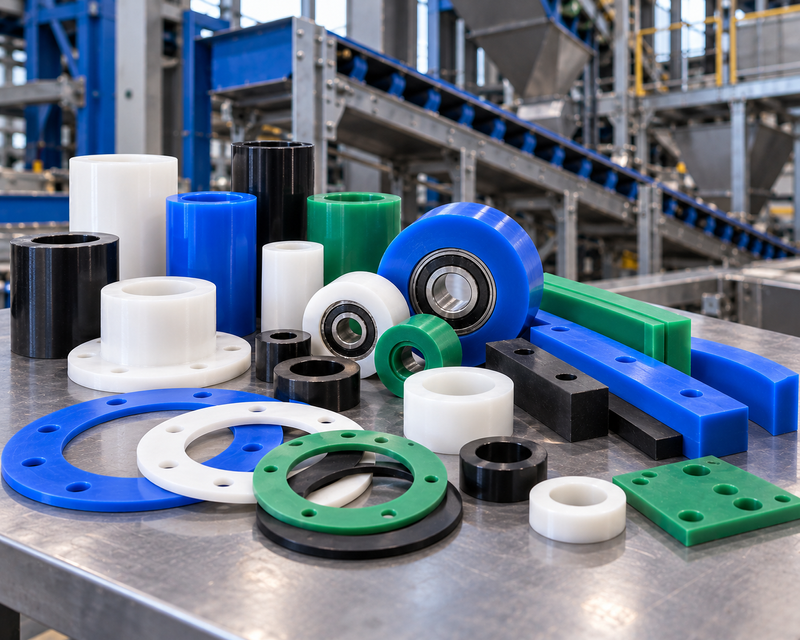
Gears, bushes, rollers, guides and machine components |
|
Role in operation |
Typically limited to a simple functional role |
Often used where the component directly affects equipment operation |
|
Material selection |
Commonly chosen around price and general suitability |
Chosen around specific operating and design requirements |
|
Failure consequence |
Replacement may have limited operational impact |
Failure can contribute to downtime, maintenance or production disruption |
|
Cost consideration |
Lower purchase price is often the main advantage |
Higher upfront cost is weighed against service life and operating value |
How Can Engineering Plastics Justify the Higher Cost?
The higher price of engineering plastics is not a fixed premium. It reflects specific performance advantages that provide value when an application requires them. The following factors can help determine when the additional cost is reasonable:
Longer Wear Life in High-Friction Applications
Strong wear and abrasion resistance can slow material loss in components that repeatedly slide, rub or contact other moving parts. In continuously operating plants and machinery, this can reduce how often you replace wear parts, lowering both replacement-material costs and maintenance labour.
UHMWPE is commonly selected for liners, guides and sliding surfaces because its strong abrasion resistance and low friction can extend wear life in components exposed to repeated movement.
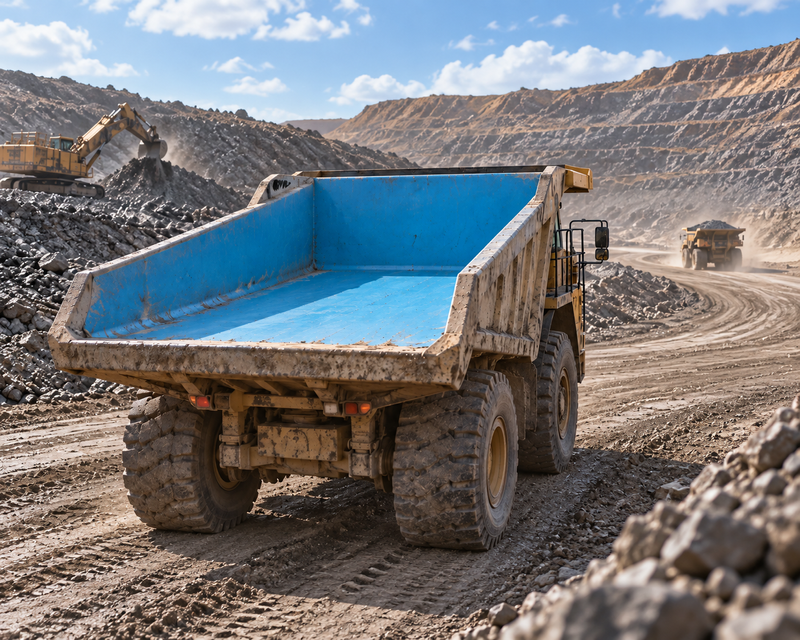
OKUSLIDE® liner products apply these properties in bulk material handling, where truck bodies, hoppers and chutes can benefit from improved material release and reduced liner wear.
Greater Strength Under Mechanical Loads
Higher mechanical strength and stiffness help components withstand repeated loading without excessive bending or deformation. This becomes important where a part must hold its shape and function correctly under continuous or repeated force, rather than simply resisting wear from contact or friction.
Resistance to creep, the gradual deformation that occurs under sustained load, is particularly important for components that must hold their shape over extended periods, helping them maintain dimensional accuracy throughout prolonged use.
For gears, bushes, rollers and other mechanically loaded parts, this load-bearing performance can justify the higher engineering plastic cost, as deformation in these components can directly affect equipment operation.
Better Dimensional Stability for Precision Components
Stable dimensions allow machined parts to retain the tolerances, clearances and alignment they were designed for throughout their service life. Where components must fit precisely against other parts, even small dimensional movement can lead to poor fit, binding or a loss of accuracy in the wider assembly.
Acetal (POM) combines rigidity, low moisture absorption and dimensional stability, making it well-suited to precision components such as gears, bushes, rollers and pump or valve parts. When fit and alignment directly affect performance, these properties can provide a strong reason to choose high-performance engineering plastics over lower-cost alternatives.
Reliable Performance at Elevated Temperatures
Heat can reduce stiffness, increase creep and alter the dimensions of plastics operating beyond their suitable temperature range. Once a component moves outside a material's temperature capability, its mechanical and dimensional performance can degrade quickly, even if it appears adequate under normal conditions.
Higher-performance engineering polymers can retain useful mechanical and dimensional properties at temperatures beyond the practical limits of many general-purpose plastics. Heat exposure can come from several sources in an industrial setting, including:
- Process heat from ovens, dryers, heated tanks or hot fluids
- Frictional heat generated by continuous sliding, rotating or high-speed contact
- Radiant heat from nearby motors, exhaust components or other equipment
- Ambient heat in enclosed plant areas with limited airflow
Where any of these conditions form part of your operating environment, paying more for greater thermal capability can help preserve component reliability and service life.
Greater Resistance in Aggressive Chemical Environments
Contact with acids, alkalis, solvents, process fluids or cleaning chemicals can cause an unsuitable plastic to swell, soften or deteriorate over time. In industrial systems, this degradation can shorten component life and increase the risk of leakage, contamination or premature failure.
PTFE offers strong chemical resistance to a broad range of aggressive substances, making it well-suited for seals, gaskets and valve seats exposed to demanding process conditions. Its chemical stability makes it a common alternative to rubber, since conventional elastomers cannot match PTFE's chemical compatibility.
Read More: Why Engineers Choose PTFE Over Rubber for Seals and Gaskets
How to Assess the Value of an Engineering Plastic?
Deciding whether the extra cost is worthwhile requires assessing the plastic against the demands of the specific application, not a general comparison between material types.
- Application requirements: Start by identifying the actual conditions the component will face, including load, movement, temperature, chemical exposure and moisture. These factors determine which properties matter for your part.
- Required material properties: Not every available property adds value to your application. Separate what is essential for reliable operation from performance the part will never use, so you are not paying for capability you do not need.
- Expected service life: How long the component needs to last before scheduled maintenance or replacement shapes whether a higher-cost material is worthwhile. A short-life part rarely justifies the same investment as one expected to run for years.
- Consequences of replacement or failure: Some components can be replaced with minimal disruption, while others involve significant labour, machine access or production downtime. The harder a part is to replace, the more that risk should factor into your material choice.
- Overall lifecycle value: Rather than comparing unit prices alone, weigh the upfront cost of each suitable material against its expected service life and the operational costs associated with it. The better long-term value often lies with the higher-cost option.
Engineering plastics are worth the extra cost when an application demands greater wear resistance, mechanical strength, dimensional stability, thermal capability or chemical resistance than a lower-cost material can reliably provide. The right decision comes down to weighing the upfront price against expected service life, maintenance demands and the operational cost of premature failure or replacement.
In demanding industrial applications, the higher-cost material can deliver better value over the component's life.
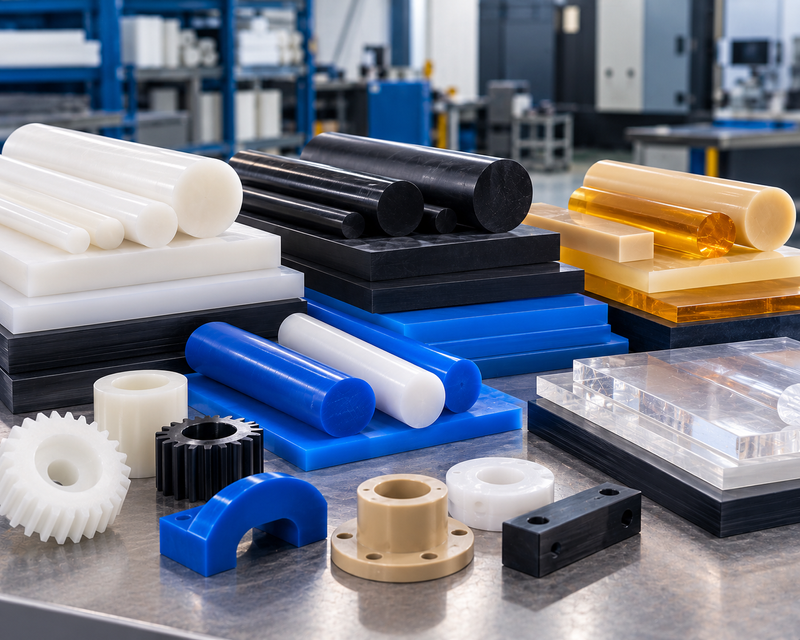
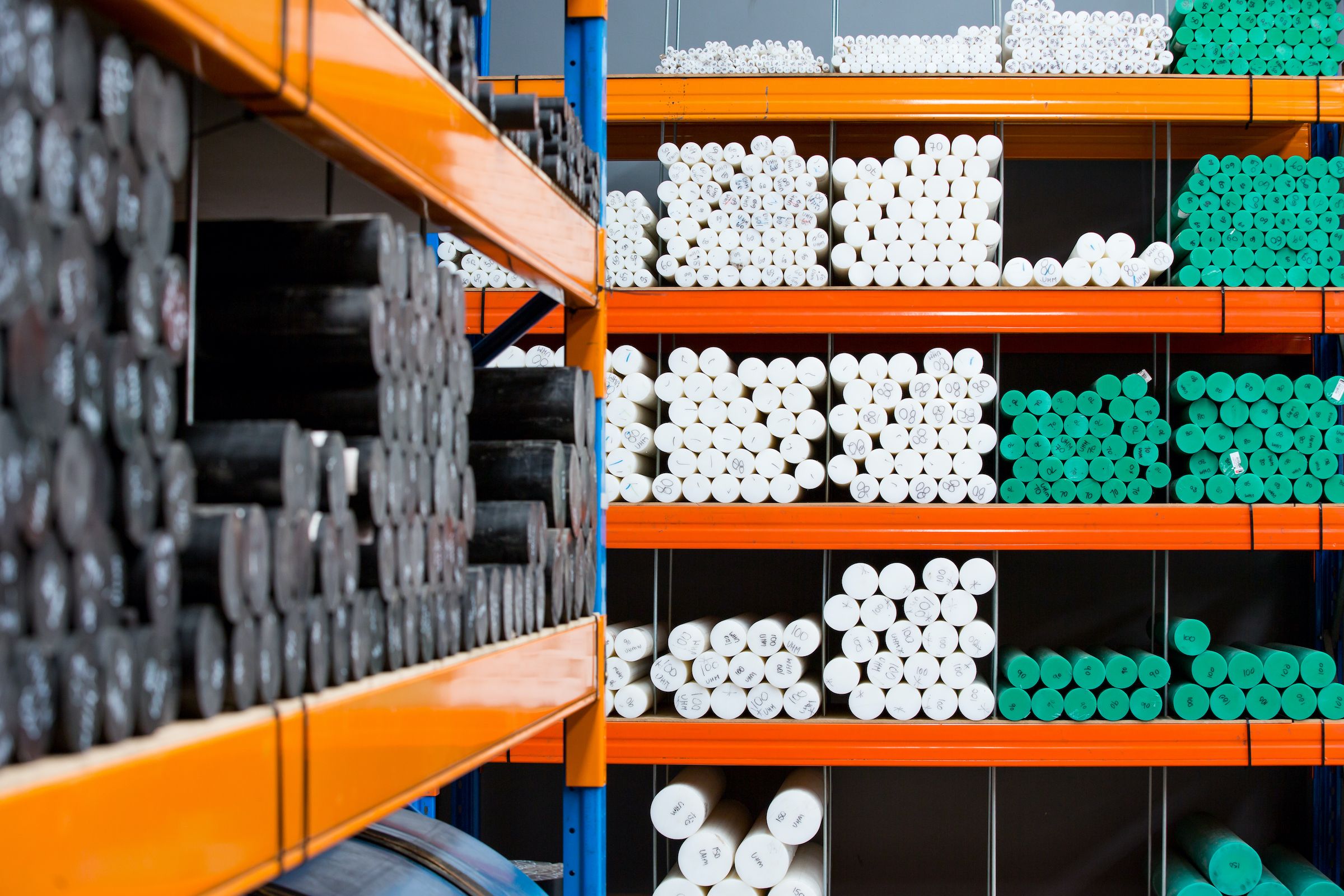
Choosing the right material for your application starts with comparing each option against its actual operating requirements. ePOL’s online portal allows you to review material properties, check stock availability and order engineering plastic sheets and rods to suit your application.
Get in touch with ePOL today to order the right engineering plastic for your needs.
FAQs
Are engineering plastics suitable for outdoor applications?
Yes. UV-stabilised HDPE and UHMWPE grades can be suitable for outdoor use. The best choice depends on the level of UV exposure, moisture, temperature variation and mechanical demands.
Can engineering plastics be machined into custom replacement parts?
They can. Engineering plastics like Cast Nylon and UHMWPE can be machined into custom replacement parts using CNC routing, milling and turning.
What materials can engineering plastics replace?
Engineering plastics can replace metals, rubber, glass and lower-performance plastics in suitable applications. Replacing conventional materials with engineering plastics can help reduce weight, corrosion, friction or maintenance demands, depending on the application.
What is the difference between HDPE and UHMWPE for industrial components?
HDPE and UHMWPE are both durable polyethylene materials, but UHMWPE offers greater wear, impact and low-friction performance, while HDPE is generally more cost-effective and easier to fabricate.