At a glance
- Sharp tooling and correct workholding help prevent deformation, burrs and poor surface finishes.
- Turning and drilling plastics requires different cutting conditions from machining metals.
- Heat and chip control are critical for maintaining dimensional accuracy during machining.
- Acetal, PET, HDPE and PEEK each offer different advantages for turned and drilled components.
Turning or drilling engineering plastics with the wrong technique can cause heat build-up, deformation, rough surfaces, burrs or inaccurate dimensions. These issues affect fit, finish and function, and they become more likely when you apply metal-machining habits to plastic without adjusting them.
Polymers respond differently from metals to cutting forces, friction and temperature, so methods proven on metal do not always give the same results. Engineering plastics conduct heat poorly, so warmth concentrates at the cutting zone instead of dissipating as it does in metal. They also expand with temperature and flex under load, which makes tool choice and cutting conditions important for accurate results.
Your finished parts depend on how you cut, support, cool and clear chips throughout the operation, and on choosing among the best engineering plastics for precise, efficient machining.
How to Turn and Drill Engineering Plastics Without Damage
Consistent results come from adapting standard machining practices to the properties of the plastic. Each of the considerations below affects the accuracy of your turned and drilled parts.
Start with Sharp, Suitable Cutting Tools
A sharp cutting edge lets the tool cut through the plastic cleanly, rather than rubbing or pushing against it. Rubbing generates friction and heat, which can soften the material at the cutting zone and lead to a poor surface finish or dimensional drift.
Tool geometry matters just as much as sharpness, since adequate rake and clearance angles reduce contact between the tool and the workpiece and keep the cutting action efficient.
Worn tooling produces excess heat, burrs and rough surfaces, so it needs replacing or resharpening before those problems appear. Tool wear affects each engineering plastic differently because their machining characteristics differ. Before you choose tooling, reviewing what makes engineering plastic machinable helps you match it to the plastic you are cutting instead of relying on choices made for another material.
Support the Workpiece Without Over-Clamping It
Your workpiece needs enough support to prevent movement or vibration during cutting, but excessive clamping pressure can distort softer engineering plastics before cutting starts. This distortion often disappears once the clamp is released. However, if you cut the part while it is compressed, the finished component can spring back out of tolerance.
Long, thin or otherwise flexible components need extra support to counter deflection under cutting forces. Without it, the plastic can flex away from the tool mid-cut, producing an uneven surface or inconsistent dimensions along the part. Matching your workholding to the plastic and the component geometry protects finished accuracy.
Use Controlled Cutting Speeds and Feeds When Turning
When turning engineering plastics, settings from metalwork rarely suit the material, and the best values also vary between polymers. An Acetal bush, for example, may run well at settings that give a poorer result on a component made from another polymer.
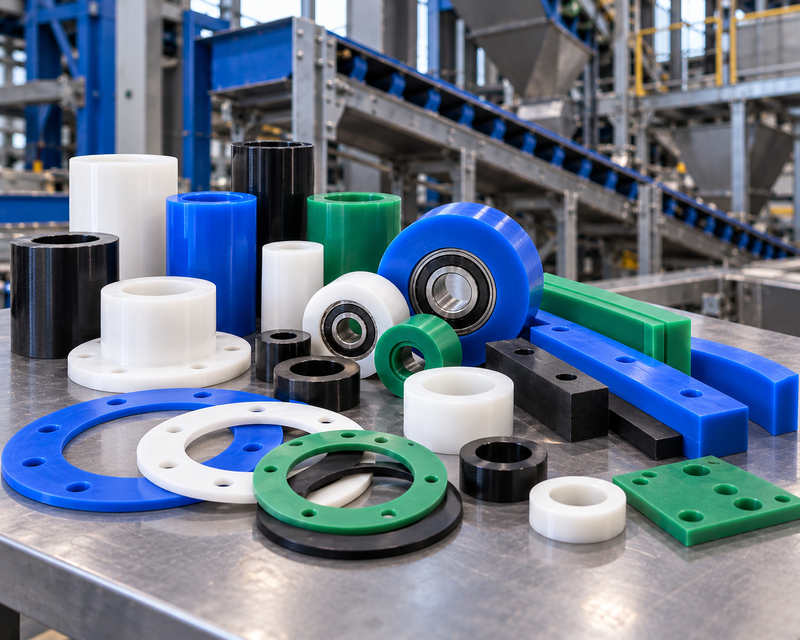
For bushes, sleeves, rollers or spacers, you can improve dimensional accuracy and surface quality by roughing in stages and finishing with a separate pass. This is more reliable than reaching the final dimension in one heavy cut.
Drill Holes Progressively and Control Breakthrough
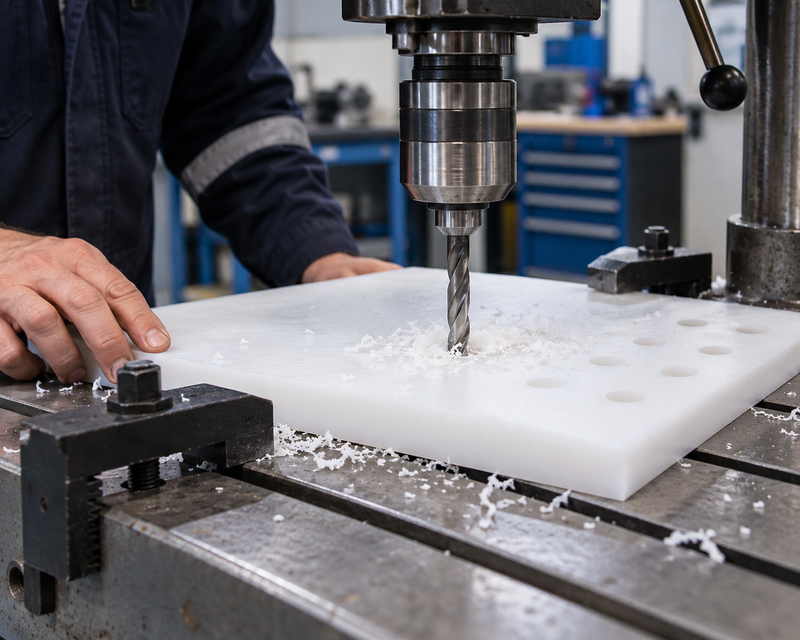
Drilling engineering plastics starts with a sharp, properly aligned drill. Misalignment or a dull cutting edge can push the material rather than cut it cleanly, resulting in an inaccurate or rough hole. For deeper holes, you can use peck drilling, withdrawing the drill at intervals to clear chips from the flutes and reduce heat build-up around the cutting edge.
Breakthrough is the stage where the drill is most likely to cause damage. Reducing the cutting pressure as the drill nears the far side lowers the force at the exit point, and supporting the workpiece underneath where practical helps prevent chipping, grabbing or deformation.
Control Heat and Remove Chips as You Machine
Removing swarf efficiently stops it collecting around the cutting edge, where it increases friction and localised heat. This applies when machining plastic components, whether the operation involves turning, drilling or both.
Prolonged rubbing and heat build-up can soften engineering plastics and affect the surface finish or final dimensions, so temperature needs managing throughout the machining process.
Key practices include:
- Chip clearance: Pausing the cut to remove swarf that has collected on the tool or in the hole keeps the cutting path clean.
- Workpiece monitoring: Softening, smearing or dimensional changes during machining indicate that heat is building up.
- Tool contact: A tool that cuts continuously instead of dwelling against the material generates less friction and heat.
- Cooling: Where cooling is needed, compressed air or a machining fluid that is compatible with the plastic being machined is the usual choice.
Which Engineering Plastics Are Easier to Turn and Drill?
Technique matters, but the plastic itself determines how tolerant the process is of small errors. The properties below make each of these materials a more predictable choice for turning and drilling:
- Acetal: Stiffness, dimensional stability and consistent machinability make Acetal well suited to turned and drilled components such as bushes, gears and small precision parts.
- PET: It absorbs little moisture and stays rigid, which supports repeatable accuracy in machined components where consistent tolerances matter.
- HDPE: Relatively easy to machine, HDPE works well for general turned and drilled parts, but its lower stiffness calls for closer control of workholding and cutting parameters when tolerances are tight.
- PEEK: Its strength and stiffness allow accurate, high-performance components, although cutting conditions need tighter control than they do for more general-purpose plastics.
Successful turning and drilling starts with adapting the machining process to the properties of the engineering plastic. Sharp tooling, secure workholding, suitable cutting parameters, controlled drilling and effective heat and chip management all contribute to accurate, damage-free results.
Your choice of plastic matters too, because Acetal, PET, HDPE and PEEK each machine to a different standard. If you weigh machinability during design and selection, results are more consistent once machining begins.
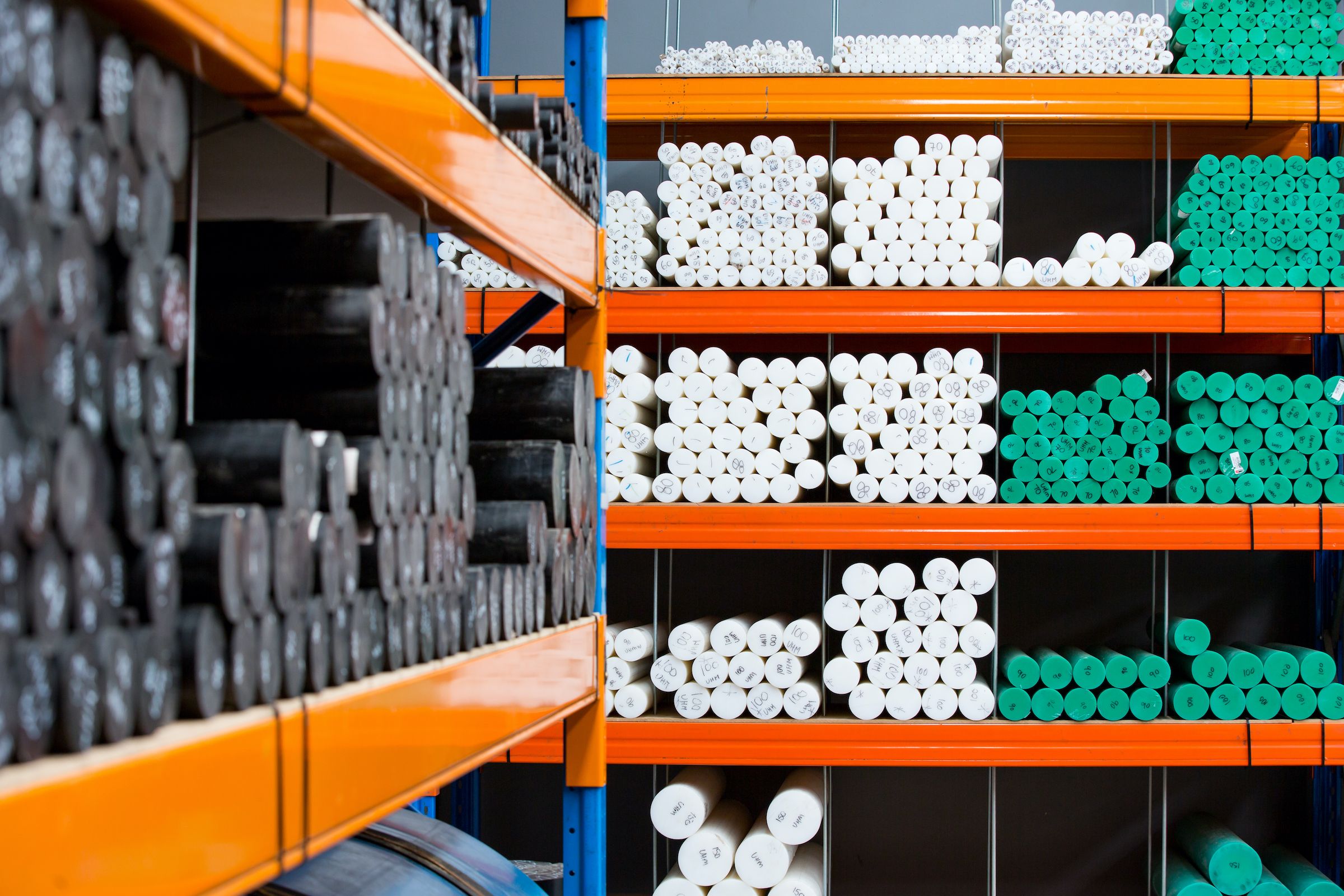
If you are specifying machined components, ePOL’s online portal provides access to engineering plastic specifications and stock availability, making it easier to identify suitable sheet or rod for the job. Contact us today to explore your material options and find the right engineering plastic for your application.
FAQs
Can engineering plastics be machined to tight tolerances?
Yes. Many engineering plastics can be machined to tight tolerances if you account for their thermal expansion, stiffness, moisture absorption and dimensional stability. Acetal and PEEK are particularly suitable if dimensional accuracy is critical.
Does the thickness or diameter of plastic stock affect machining accuracy?
It can. Larger or thicker plastic stock can respond differently to cutting forces and heat, so you may need to adjust machining conditions to maintain accuracy. ePOL supplies engineering plastic sheets and rods in a range of thicknesses and diameters to suit different component requirements.
What makes one engineering plastic more machinable than another?
Machinability depends on properties such as stiffness, thermal expansion, thermal conductivity, internal stress and chip formation. Plastics that stay dimensionally stable and cut cleanly are generally easier to machine to the tolerances you need.
Which engineering plastics are suitable for chemical processing applications?
Chemical processing applications commonly use plastics such as PTFE, PEEK, HDPE and UHMWPE because they can resist different chemicals and operating conditions. The right choice depends on the specific chemical, concentration and temperature involved, so it helps to compare engineering plastics for chemical processing.