At a glance
- Concrete and grout build-up can restrict material flow, increase cleaning demands and disrupt tunnelling operations.
- OKUSLIDE® liners help reduce fresh concrete and grout sticking to suitable equipment surfaces.
- Their low-friction surface supports smoother discharge, leaving less residue to harden between cycles.
- Abrasion-resistant OKUSLIDE® liners help hoppers, chutes and discharge bins keep a consistent contact surface over repeated cycles.
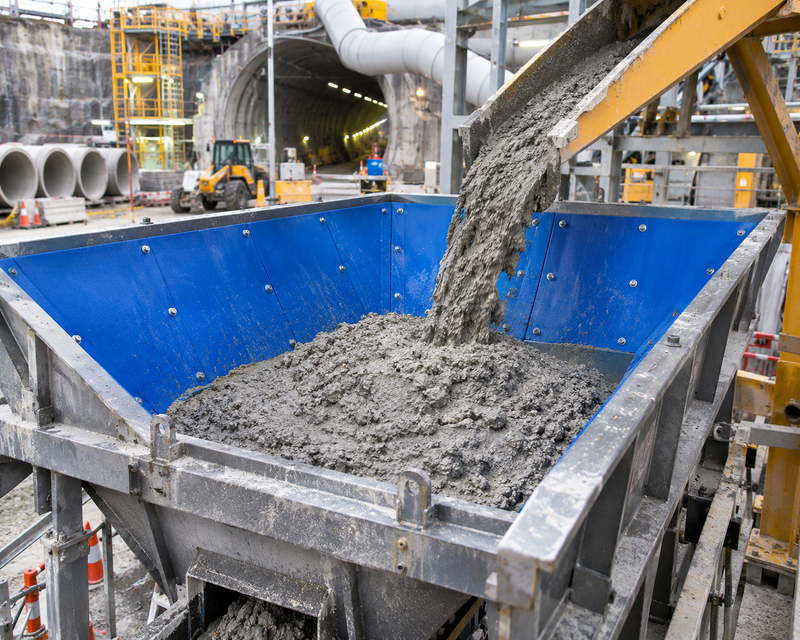
Tunnel construction depends on concrete and grout for lining, structural support and other underground works. Tunnel plant equipment such as hoppers, transfer chutes and discharge bins handles these wet cementitious materials in every cycle, and some material stays on internal surfaces after discharge.
If left to set between cycles, this residue can narrow outlets, reduce capacity, add cleaning work and disrupt schedules. Managing it matters in tunnelling, where the same equipment works through demanding cycles repeatedly.
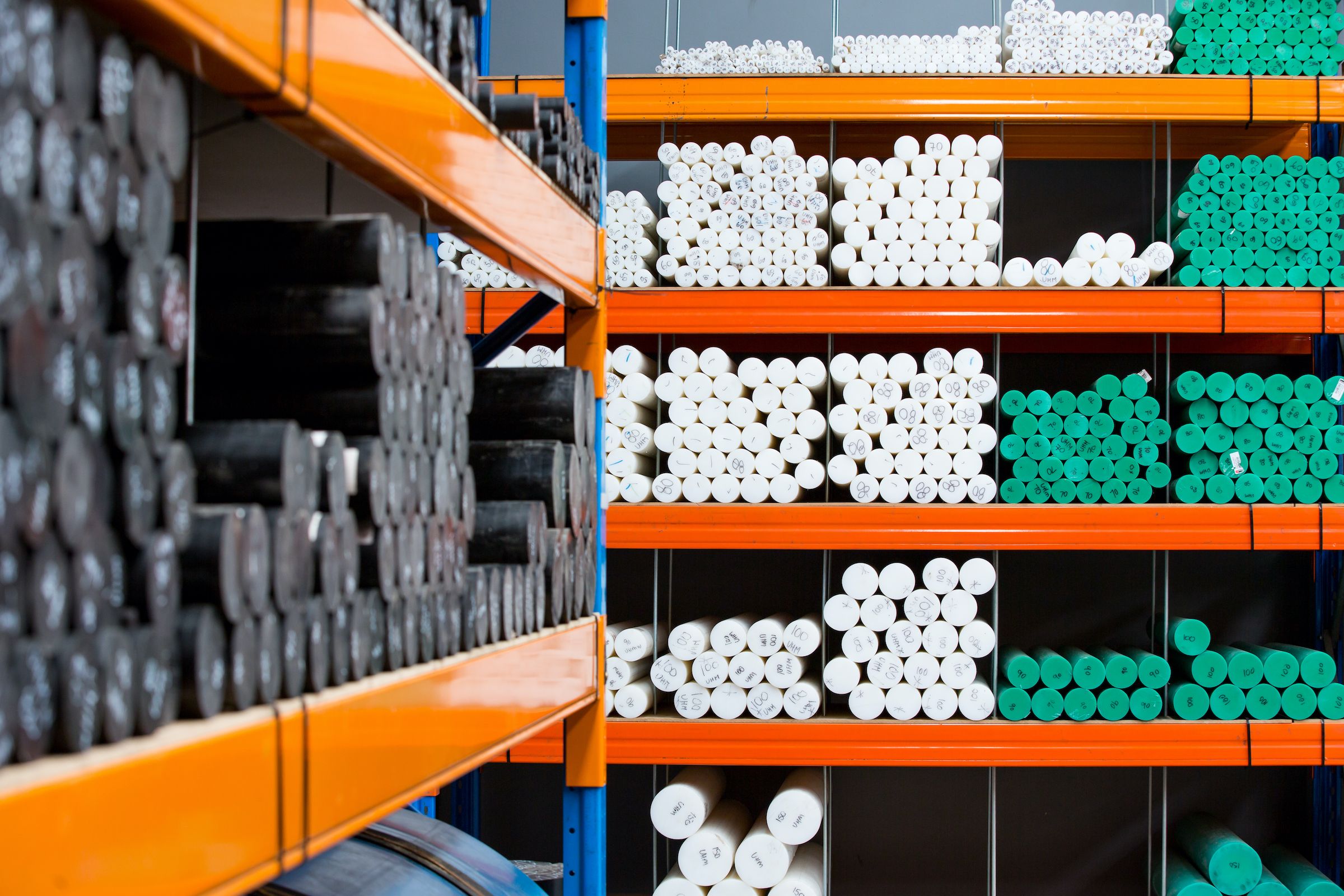
OKUSLIDE® is a specialised UHMWPE lining material designed for applications where material sticking, friction and abrasive wear are concerns. In tunnel plant equipment, it can help you reduce concrete and grout build-up on surfaces where residue forms.
This blog takes a closer look at how the OKUSLIDE® liner helps reduce concrete and grout build-up in tunnel plant equipment.
Why Concrete and Grout Build-Up Is a Problem in Tunnel Plant Equipment
Concrete and grout build-up can begin when wet material remains on hopper walls, chute floors or around discharge points. Once the residue hardens between handling cycles, it leaves uneven surfaces that hold more material from later loads. The main consequences are:
- Restricted Discharge: Hardened deposits can narrow hopper outlets and chute passages, slowing or blocking the flow of material.
- Reduced Equipment Capacity: Accumulated residue takes up internal volume, so the equipment may need additional loading cycles to handle the same material volume.
- Material Contamination: Set deposits can break loose and mix into later batches. This may affect the consistency of the concrete or grout and can introduce hardened fragments into the material being placed.
- Difficult Cleaning: Hardened concrete or grout often takes labour-intensive effort to remove, and aggressive removal methods may damage equipment surfaces.
- Operational Delays: Clearing blockages and cleaning equipment interrupts material handling and can delay scheduled tunnelling activities. Because the work cycle repeats, even short stoppages can accumulate into lost time.
How OKUSLIDE® Helps Reduce Concrete and Grout Build-Up in Tunnel Plant Equipment
OKUSLIDE®, best known for its UHMWPE bed liners, helps reduce concrete and grout build-up in tunnel plant equipment through a low-friction, non-stick surface that limits adhesion, supports fuller discharge and resists abrasion. Performance depends on the concrete or grout formulation, equipment geometry and liner installation. Each of these properties is explained below.
Non-Stick Surface Reduces Fresh Concrete and Grout Adhesion
The modified UHMWPE construction of OKUSLIDE® gives the liner a low-friction, low-adhesion surface. Cement paste grips rough or pitted surfaces more readily than a smooth polymer, so fresh concrete and grout adhere less readily to a suitable OKUSLIDE®-lined hopper or chute wall.
Concrete build-up in hoppers often starts at the wall, where a thin film of paste stays behind after each discharge. Lower initial adhesion leaves less of that film to harden before the next cycle, so later loads move over a cleaner surface.
Low Friction Supports Smoother Material Discharge
As concrete or grout slides towards an outlet, friction against the wall slows its movement. OKUSLIDE®’s low coefficient of friction reduces this drag. In a suitably designed sloping transfer chute, for example, the liner may help wet grout travel to the outlet more freely.
A liner that supports fuller discharge leaves less material in low-flow areas, such as hopper corners and the zone around outlets, where residue often collects first. Equipment geometry and mix consistency still matter, because stiff mixtures and a shallow slope can restrict material movement even on a lined surface.
Pump-fed grout systems also operate under different flow and pressure conditions from gravity-fed equipment, so you should assess the suitability of OKUSLIDE® liners against your specific application.
Abrasion Resistance Helps Maintain a Smoother Contact Surface
UHMWPE liners for tunnel plant equipment are exposed to constant contact with sand and coarse aggregate, which scour surfaces as material slides across them during repeated handling. The wear-resistant construction of OKUSLIDE® helps the liner withstand this abrasion, whereas bare equipment surfaces may score and roughen over time.
A liner that stays smooth has fewer grooves and edges where cementitious residue can lodge and harden, so the properties that limit adhesion and support discharge are easier to maintain over repeated cycles. Slower wear can also reduce how often liners need replacing, which lowers plant maintenance costs over time.
Where Can OKUSLIDE® Liners Be Used in Tunnel Plant Equipment?
Build-up forms differently in each type of equipment, so the lining must suit the areas where material collects. The table below pairs common problem areas with the potential benefit of OKUSLIDE® lining.
|
Equipment |
Common issue |
Potential OKUSLIDE® benefit |
|
Concrete receiving hoppers |
Fresh concrete adhering to internal walls |
Helps reduce sticking during discharge |
|
Gravity-fed grout transfer hoppers |
Wet grout remaining around discharge areas |
May reduce retained material on lined surfaces |
|
Concrete and grout transfer chutes |
Wet material collecting along contact surfaces |
Supports smoother material movement |
|
Holding and discharge bins |
Residue remaining after repeated emptying cycles |
Helps reduce material retention between cycles |
Application note: These are potential lining applications, and suitability depends on an assessment of your mix properties, equipment geometry, operating temperature and installation requirements. They are not documented tunnel-specific case studies.
Concrete and grout that remain in handling equipment set between cycles. Limiting this residue helps maintain discharge flow and equipment capacity, and it reduces cleaning time. OKUSLIDE®’s non-stick surface limits adhesion, its low friction supports fuller discharge and its abrasion resistance keeps the lining surface smooth. These benefits apply where the liner and its installation suit the mix, geometry and temperature of your tunnel plant equipment.
If concrete or grout residue is disrupting your tunnel plant equipment, OKUSLIDE® liners are worth considering as a lining solution. At ePOL, a reliable engineering plastics provider in Australia, you can browse OKUSLIDE® bed liners, check live stock and pricing where available and order through the ePOL online portal. To request a quote, contact the ePOL team.
FAQs
Do tunnel grout additives or cleaning chemicals affect OKUSLIDE® liner suitability?
UHMWPE has good chemical resistance to oils, many chemical additives and most acids and alkaline solutions, so OKUSLIDE® liners generally suit common tunnel grout additives and cleaning chemicals. Strong oxidising agents and some solvents at high temperatures can affect UHMWPE, so check your specific products with ePOL before specifying a liner.
What OKUSLIDE® liner thickness is suitable for concrete and grout handling equipment?
The suitable thickness depends on the size of your equipment, the material handled and the abrasion and impact you expect. Heavier duty generally calls for a thicker sheet, so the right OKUSLIDE® thickness is the one that fits these conditions in your application.
Can OKUSLIDE® liners withstand impact from coarse concrete aggregates?
In many bulk handling applications, yes. OKUSLIDE® is designed to handle heavy impact loads, but suitability still depends on aggregate size, drop height and how you support the liner.